Picture a platform where you can rate films, write reviews, start debates, enter contests, and earn points for all of it. Now picture making every bit of that intuitive, for people in three different countries, across three languages, without touching the product’s structure. That was my job at Peliplat.
I worked as a UX Writer and localization specialist on a film platform with global-community ambitions.
The product was rich with possibilities: reviews, debates, writing contests, gamification, a film library. My job was to turn that ecosystem into something anyone could navigate, and want to keep exploring.
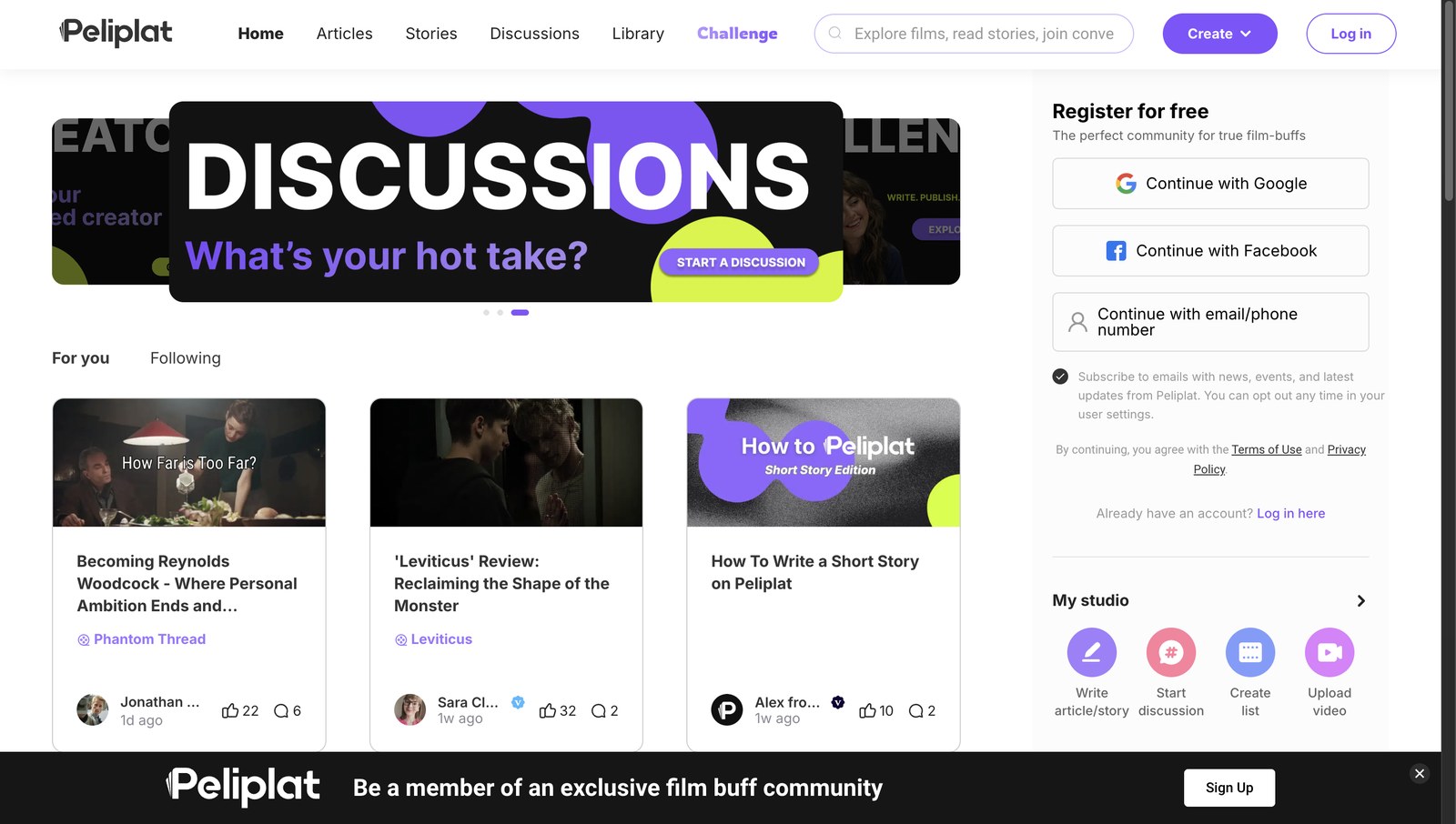
A wealth of features without clarity of language just becomes noise.
Guiding without overwhelming
The first challenge was structural: how do you help someone understand where they are, what they can do, and how to join in, without turning the interface into an instruction manual?
I wrote and refined microcopy at the critical points of the journey: CTAs, tooltips, empty states, content-creation flows, and action confirmations. Each line had to be short enough to fit the component, clear enough to need no explanation, and warm enough not to scare off someone arriving for the first time.
When the platform gamifies, and the language has to keep up
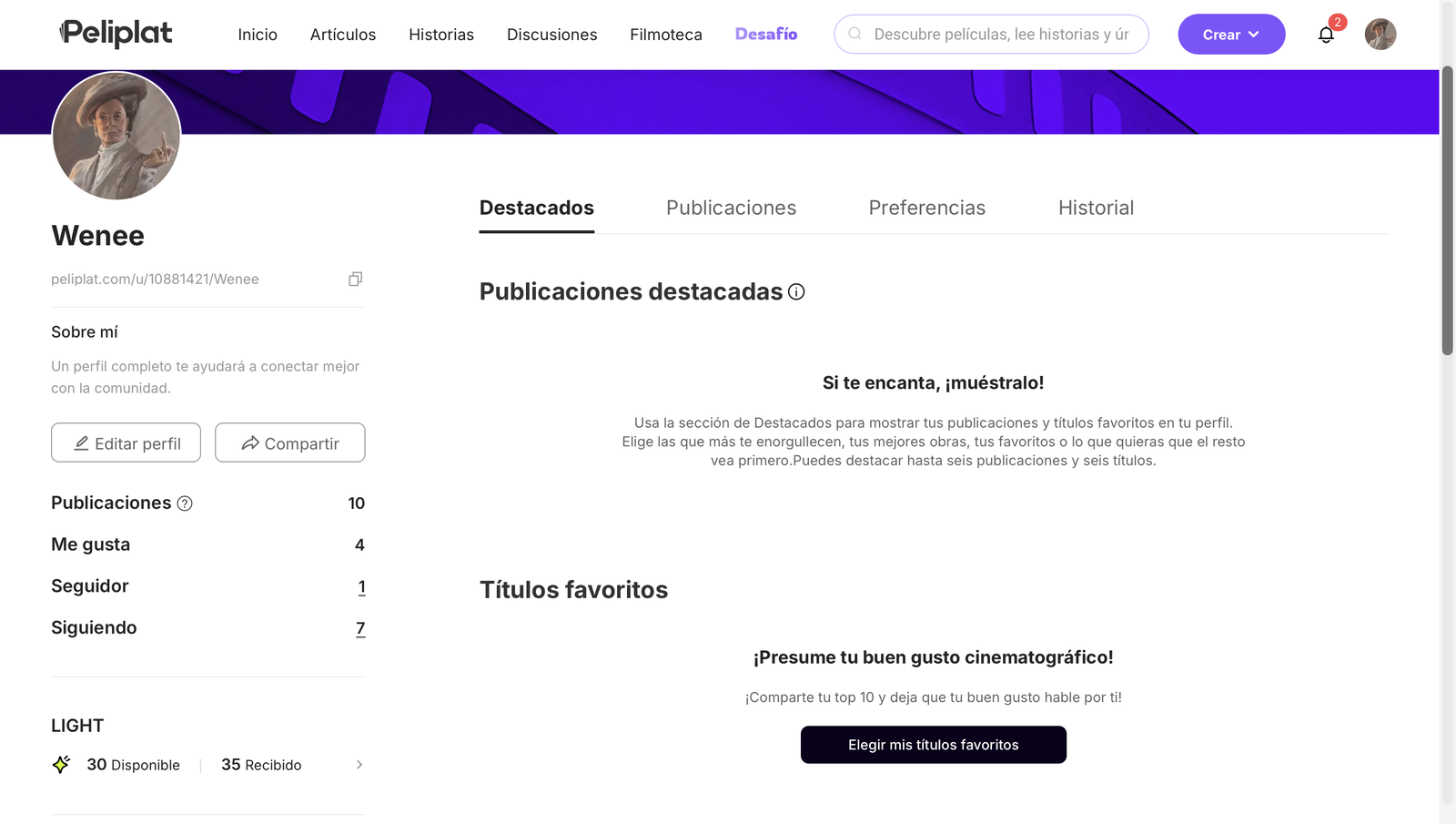
Adding gamification, with badges, missions, and points (the LIGHT system), brought a new layer of complexity. Naming the features was the easy part. The real challenge was building language that encouraged engagement naturally, without sounding like a fitness app nagging you to close your rings.
I focused on building consistency: the same terms, the same tone, the same reward logic communicated coherently across every touchpoint, from the profile to the instructions modal.
When the product team wanted to reuse one term across different functions, I pushed for distinct, logically connected names. In a dense, gamified product, disambiguation beats surface-level repetition. And when feature titles leaned on movie references, I argued them down: clever in one language, broken in the other two and over the character limit. Clearer, localization-safe names won.
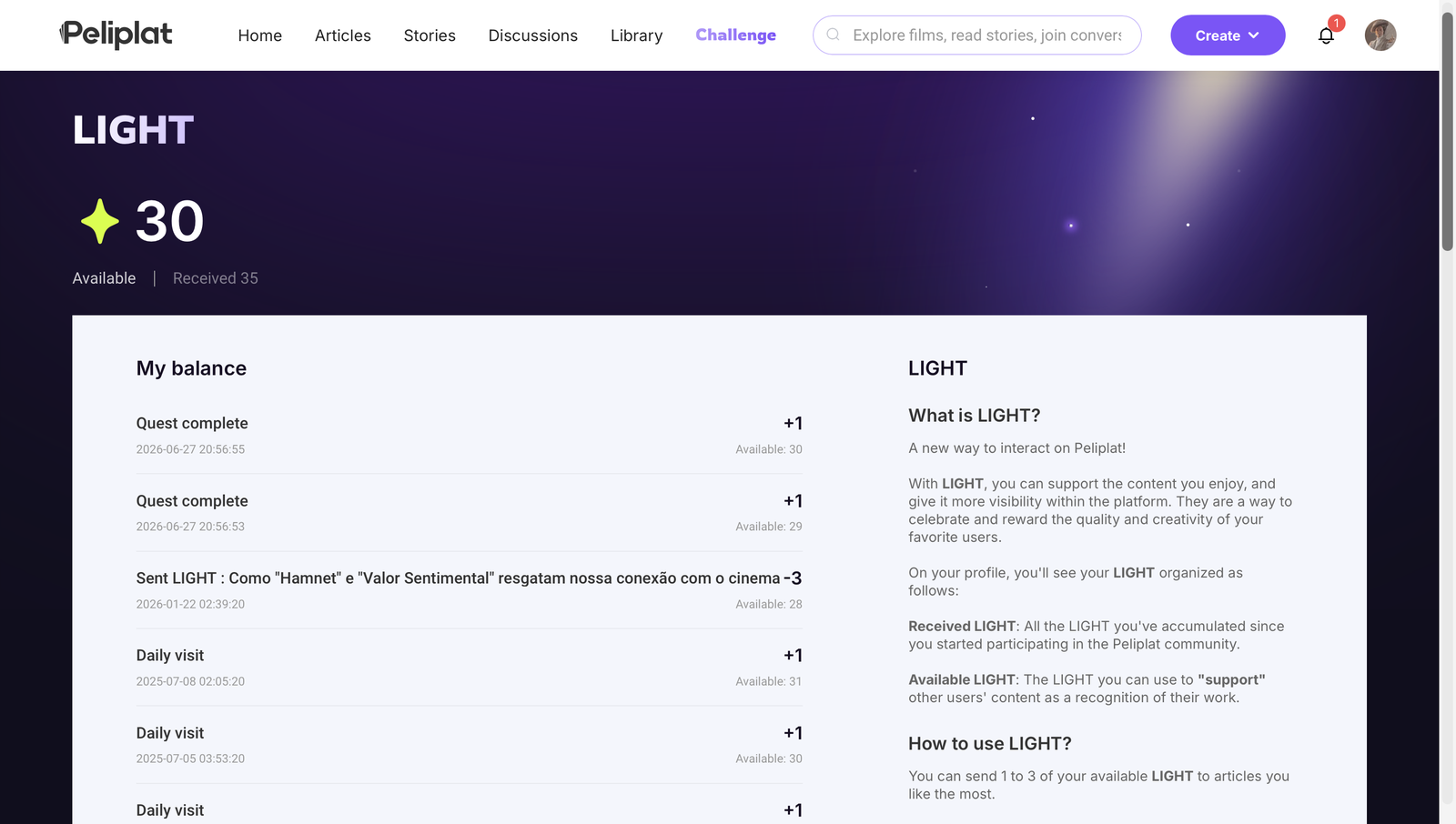
Three languages, three contexts, one voice
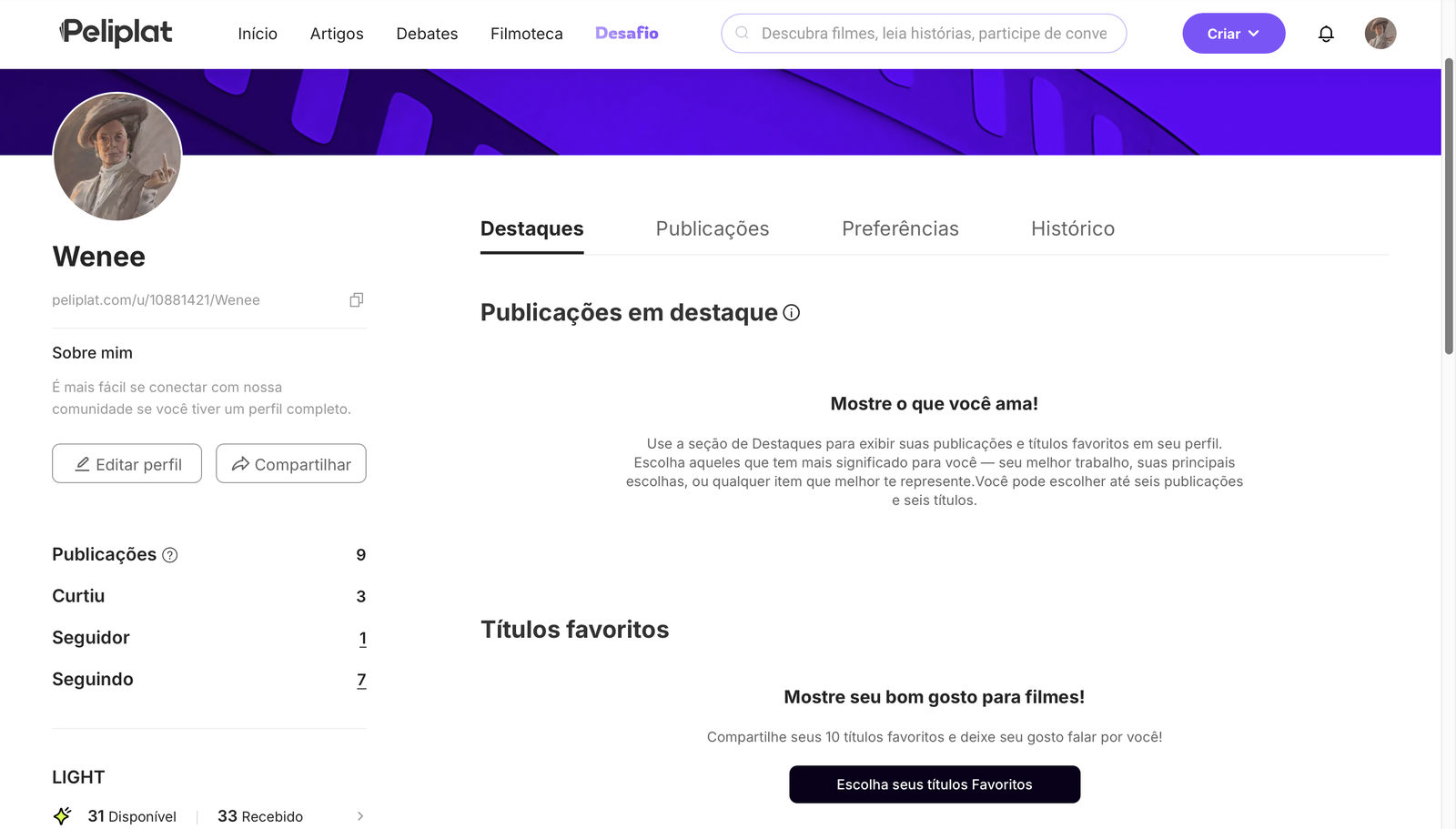
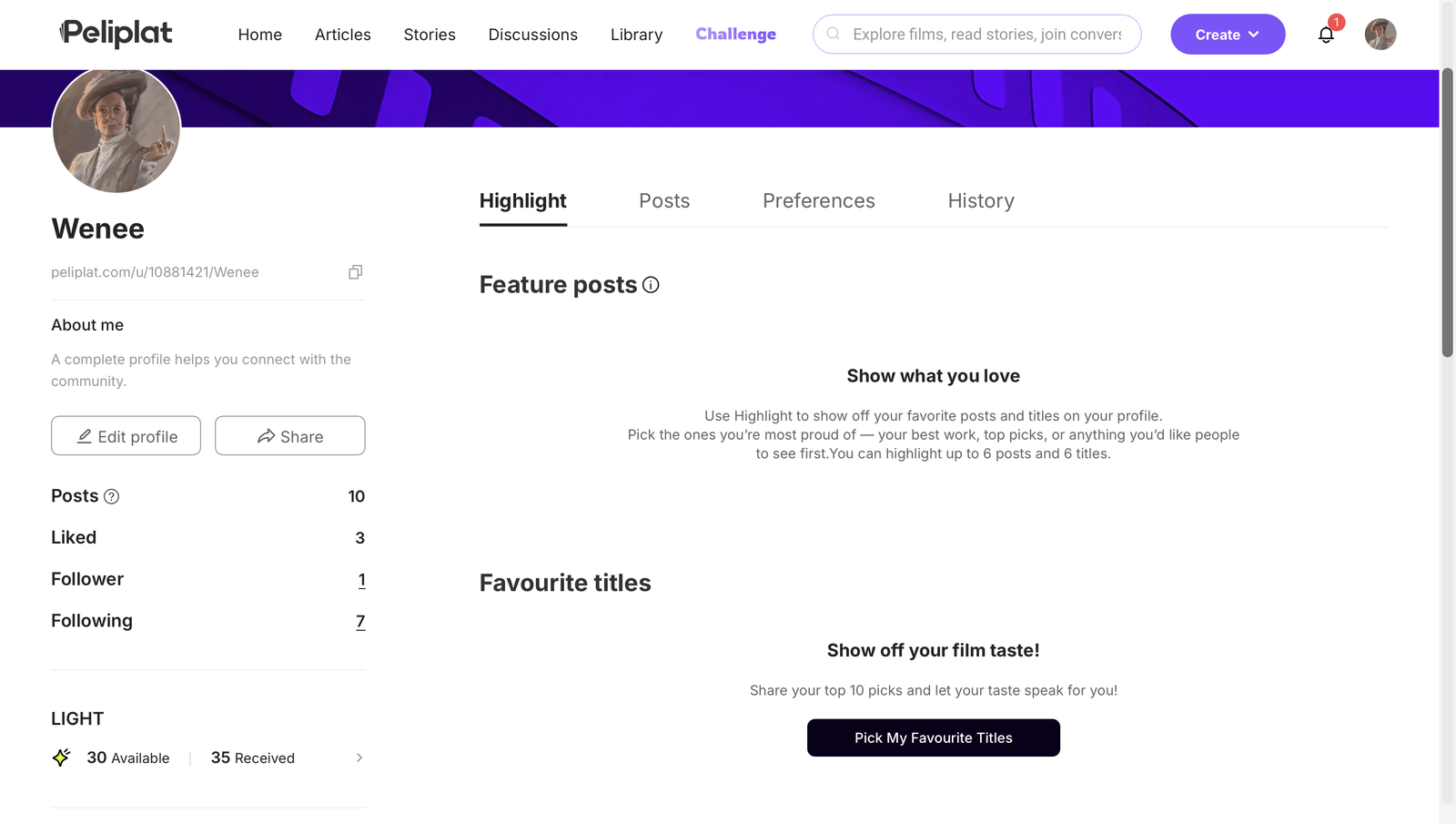
Localization was strategic from the start. I adapted the site for Portuguese, Spanish, and English, not just translating, but accounting for each market’s cultural expectations, especially the differences between Brazil and the US in tone, formality, and how people engage with online communities.
The hardest part was working through frequent review cycles in an environment with fixed components and content structure. With no room to rearrange the layout or stretch the copy, every word choice had to balance global consistency with local naturalness — sounding native in each language without breaking the product’s coherence.
Beyond the interface: help and contests
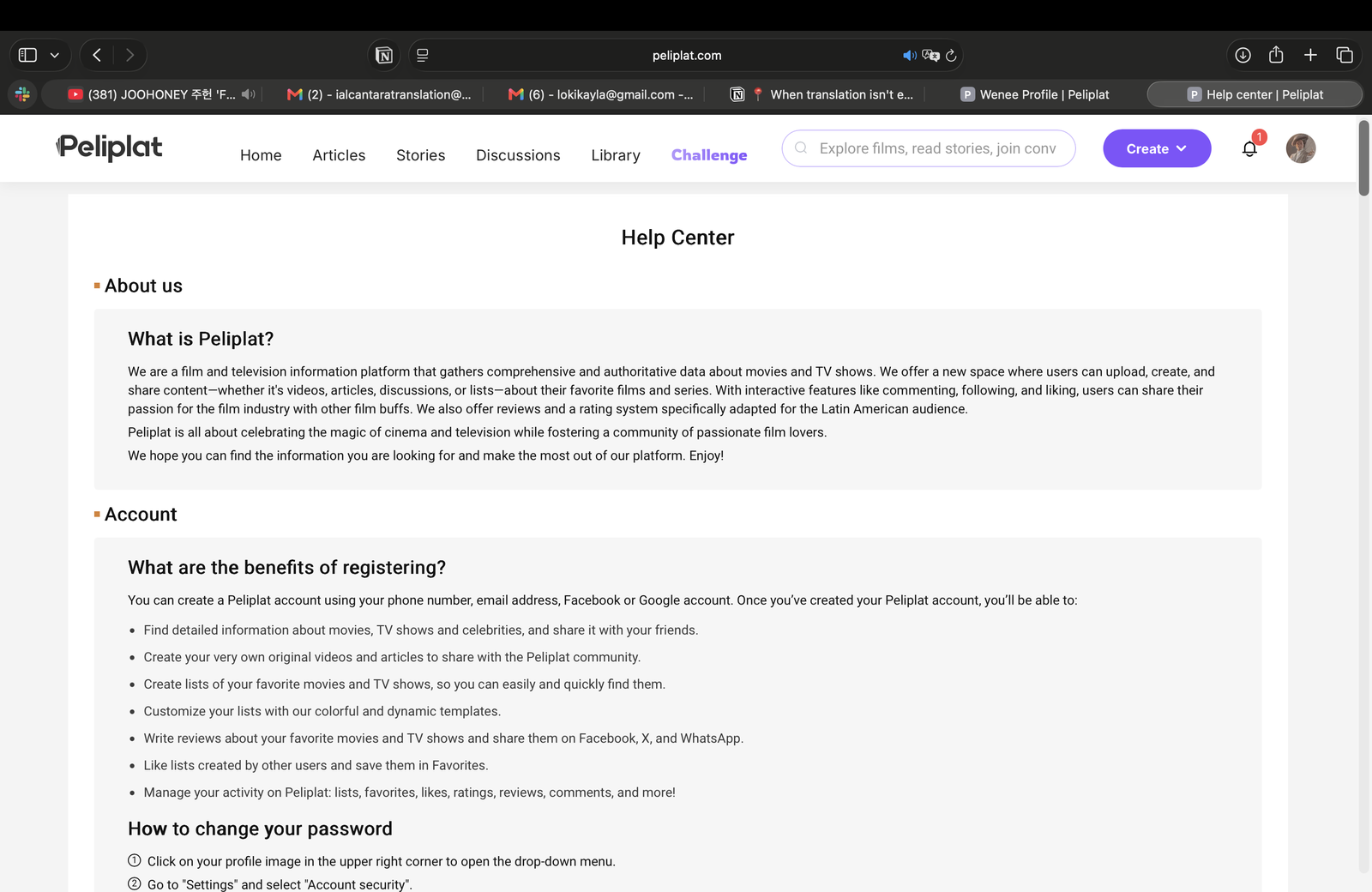
My work went beyond interface copy. I structured and wrote the Help section flows — organizing FAQs, step-by-step instructions, and account guidance, clear and accessible for a diverse, growing community.
I also wrote the guidelines for the writing contests: copy that had to be precise about the rules and motivating enough to make someone actually want to enter.
What this project taught me
In a feature-dense product, language isn’t a finishing detail.
Peliplat reinforced something already central to how I work: language is what decides whether someone understands, trusts, and comes back. And when you have to pull that off in three languages under real component constraints, every word you choose carries far more weight than it seems.